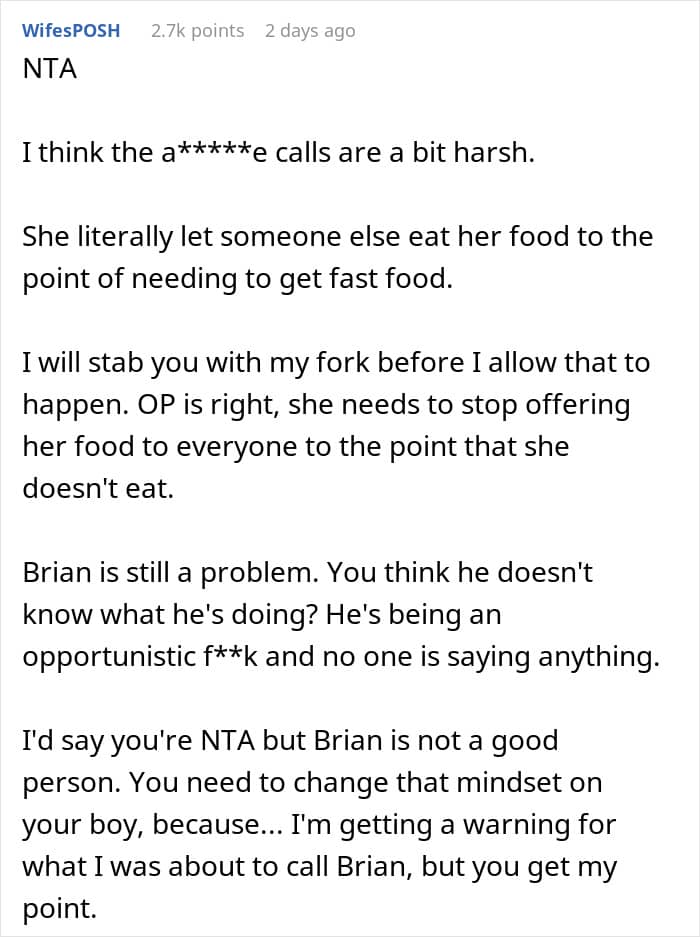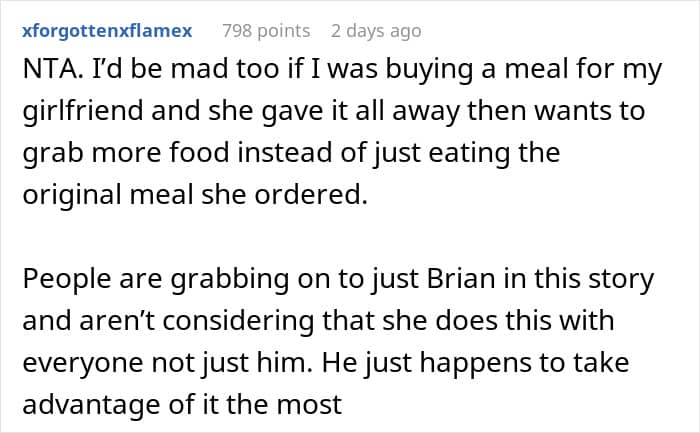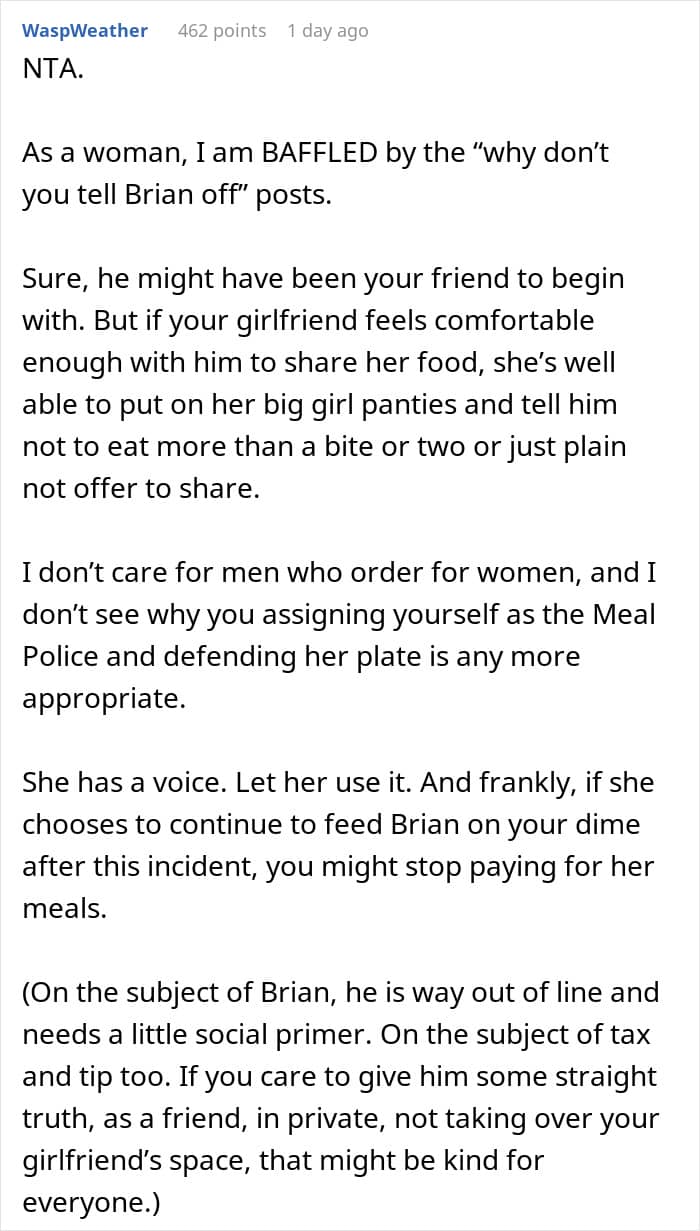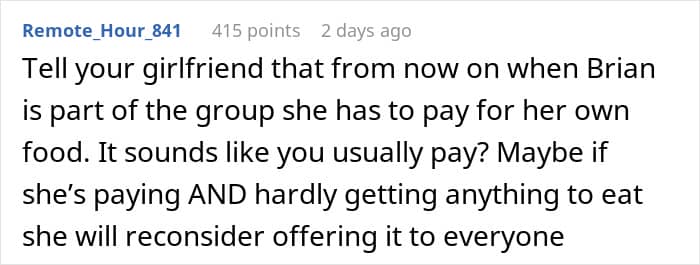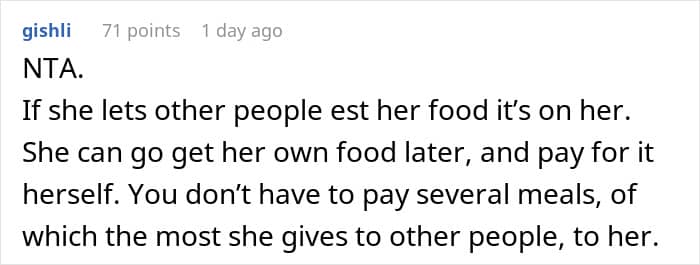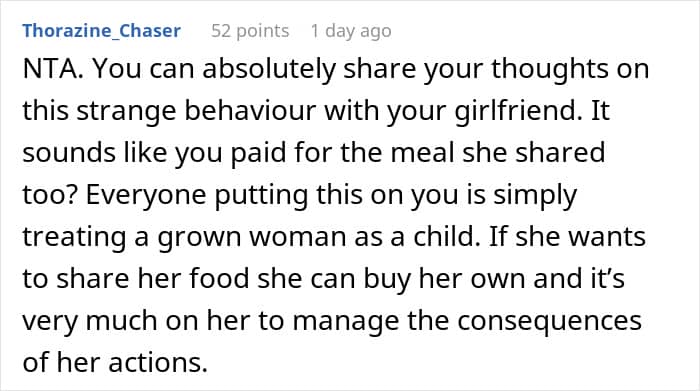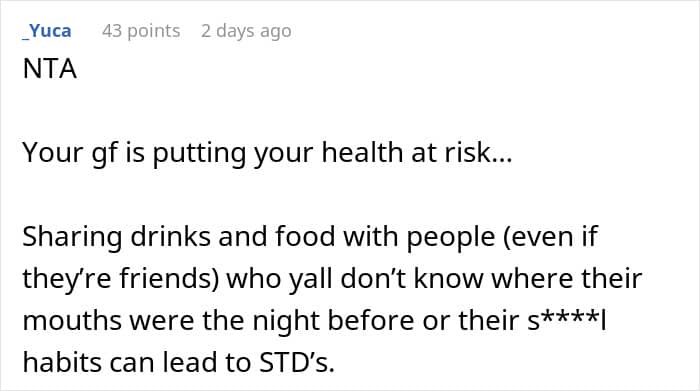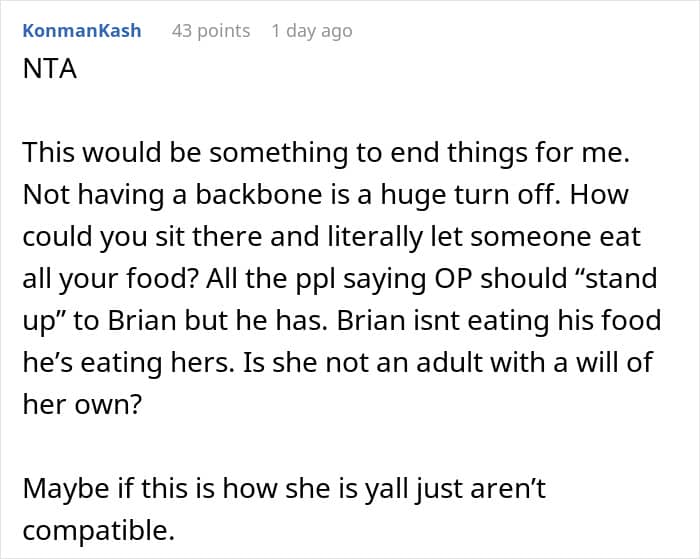
Our relationship with food is not just about consumption. It also involves respect and consideration for others. Reddit user PhantomDetective3548 is concerned that his girlfriend’s kindness is being taken advantage of. When they’re out, she always offers bites from her plate, whether it’s a simple appetizer or her main course, and during their last dinner with friends, one of the guy’s buddies ate far more than he should have, leaving her with mere crumbs. So, he’s turned to the internet for advice on how to get her to set healthy boundaries.
RELATED:
This guy got a girlfriend who always shares her food

Image credits: zinkevych (not the actual image)
And he’s getting increasingly annoyed with how much she lets others eat
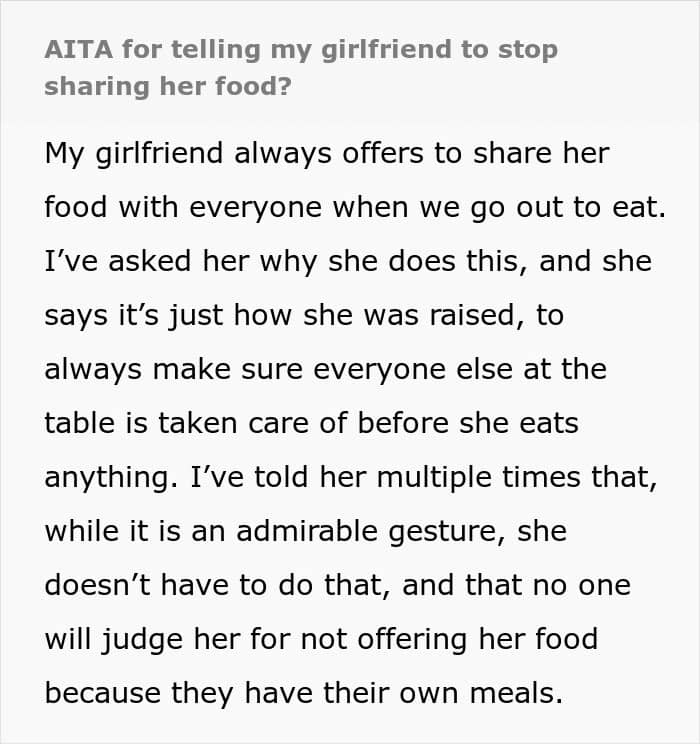
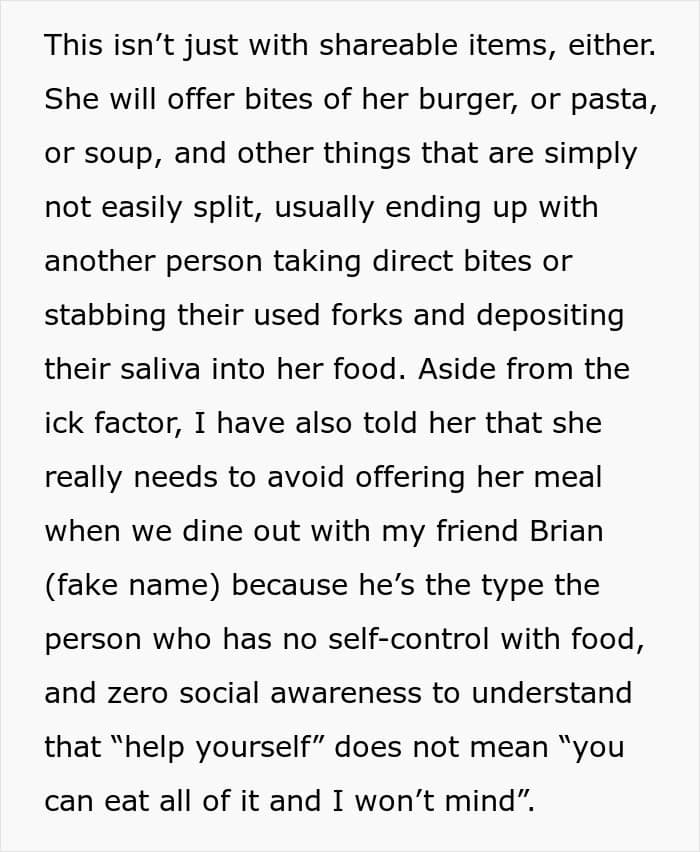
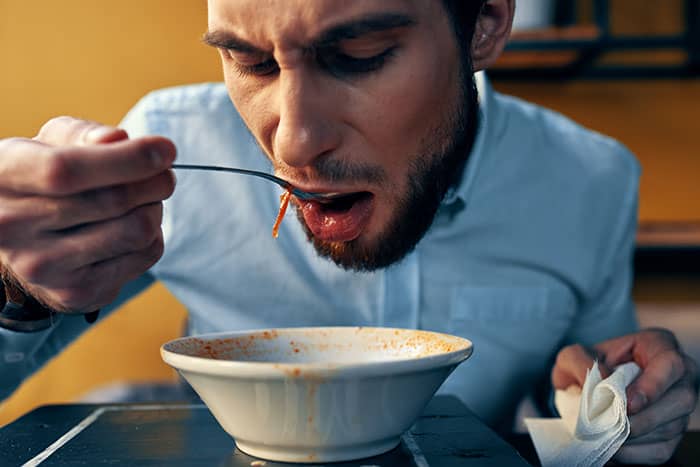
Image credits: beststudio (not the actual image)

Image credits: TriangleProd (not the actual image)
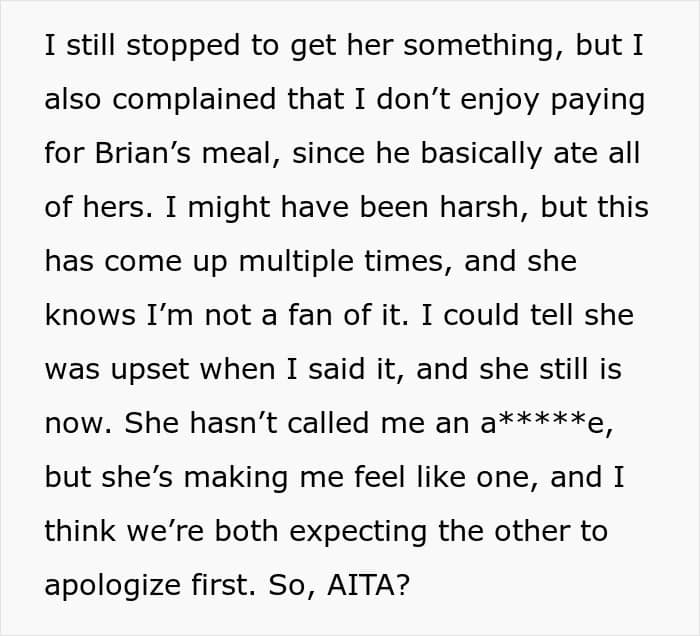
Image credits: PhantomDetective3548
Not being able to control the amount of food others take is one of the reasons why some people don’t share theirs in the first place
A poll of 2,000 adults found that four in ten people (39 per cent) identify with a famous catchphrase from the 90’s sitcom FRIENDS, “Joey doesn’t share food!”
More than a fifth (22 per cent) have even imitated the expression when someone has tried to take some of their meal.
Top reasons for people never or rarely sharing include not liking other people touching their food (50 percent) and wanting to enjoy what they paid for (40 percent).
But 17 percent of non-sharers said they would be more willing to give others a bite if they could control the exact amount they give away.
Commenting on these figures, psychologist Dr. Rachel Taylor said that, actually, a lot of good can come from sharing food.
“Sharing food and eating together have deep-rooted social and neuropsychological benefits,” she explained. “Eating together triggers positive feelings of trust and empathy – a primal need that evokes safety and comfort from years of evolution.”
“Research has shown that after a food-sharing event, circulating oxytocin levels, also known as the love hormone, increase, so when we share food, our brains associate it with social bonding and feelings of belongingness.”
But non-sharers are missing out on quite a bit of bonding
“You could say food sharing is quite literally sharing the love,” Taylor added.
“Looking specifically at sweet treats, like doughnuts, there’s the added benefit of the brain seeing it as a reward – so when we share these, or see someone else sharing a sweet treat, our mirror neurons allow us to empathise and build stronger connections to those people.”
But the difference of opinion between our Redditor and his girlfriend might even be rooted in human nature. The study revealed men are nearly twice as likely as women to never share their food (14 per cent compared to just 8 per cent).
Sweets (53 per cent), crisps (43 per cent), and doughnuts (23 per cent) are the foods people are most willing to split. On the other hand, chocolate (22 per cent), pizza (17 per cent), and chips (15 per cent) are the least likely to be shared.
As his story went viral, the guy provided more information on his girlfriend’s eating habits
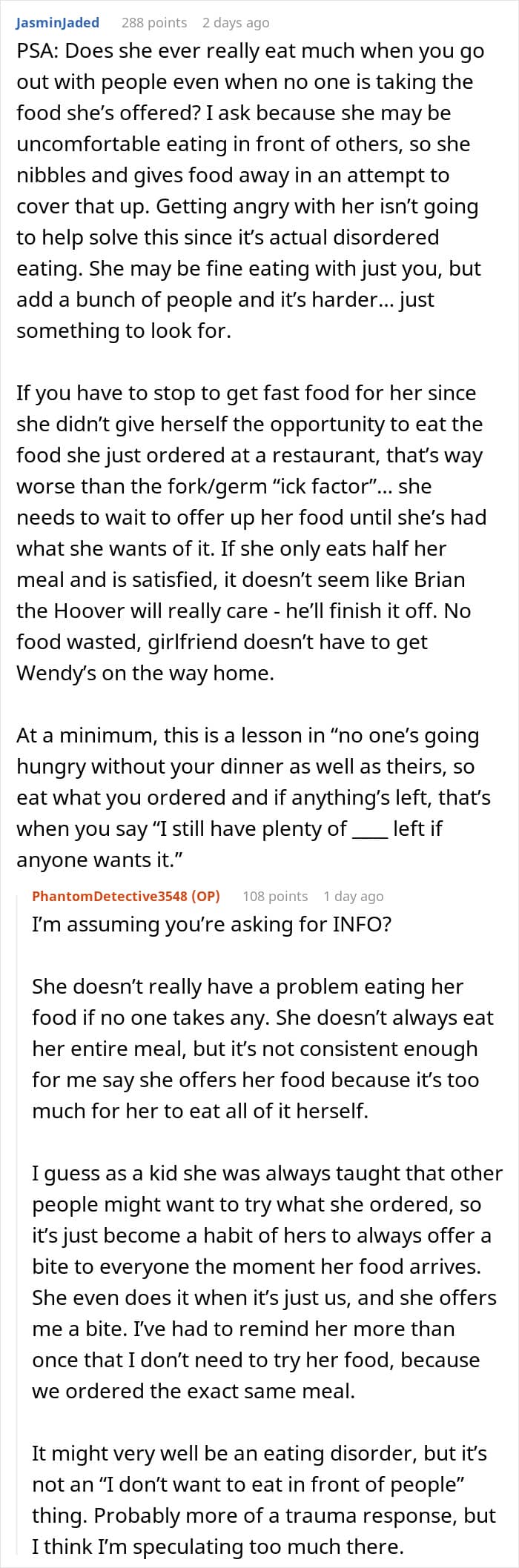
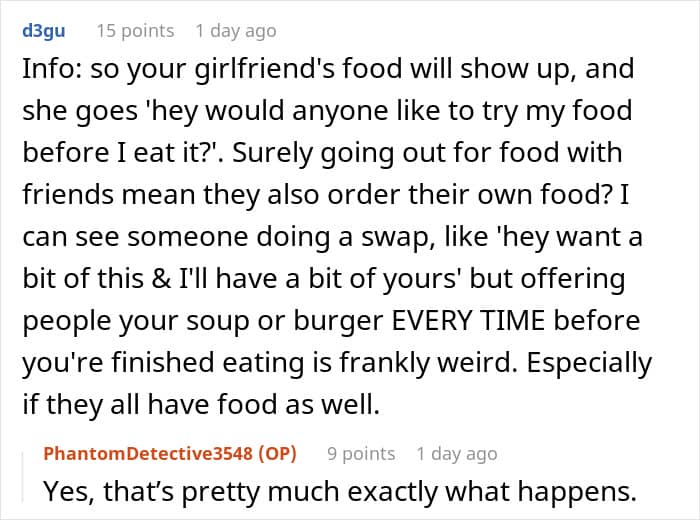
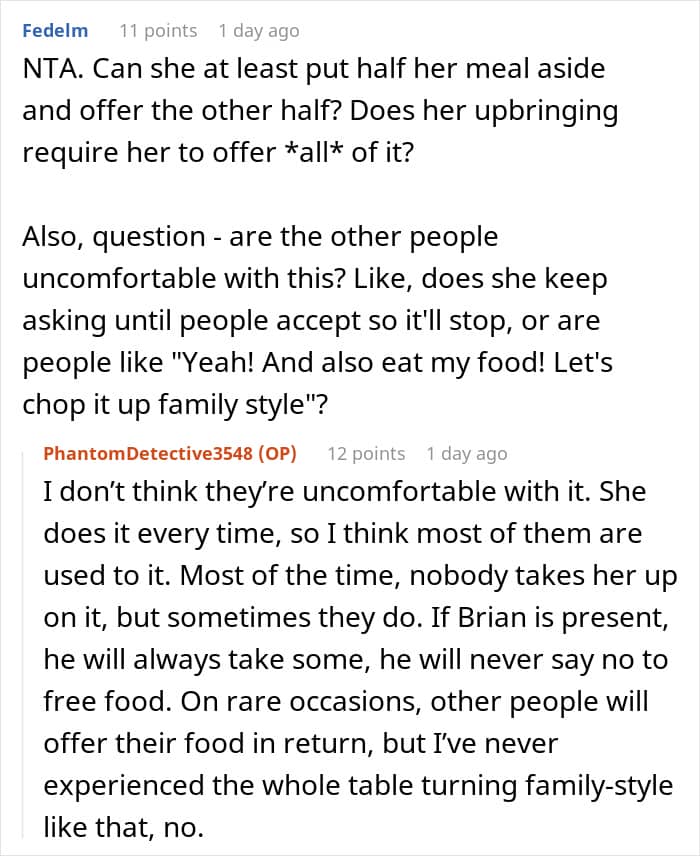
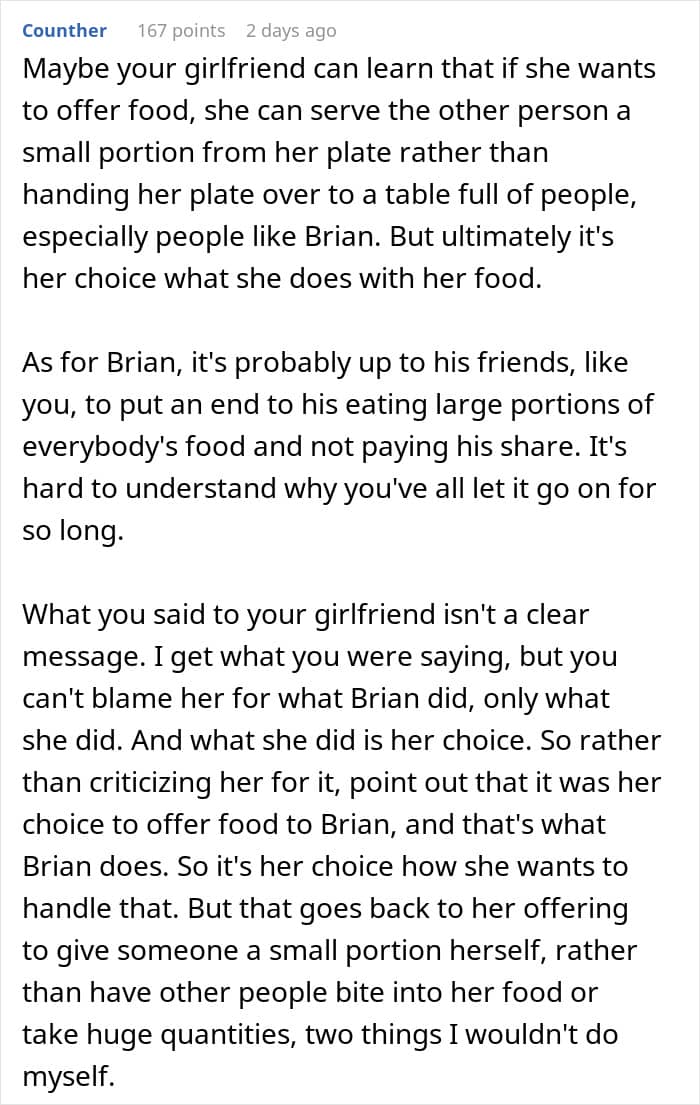
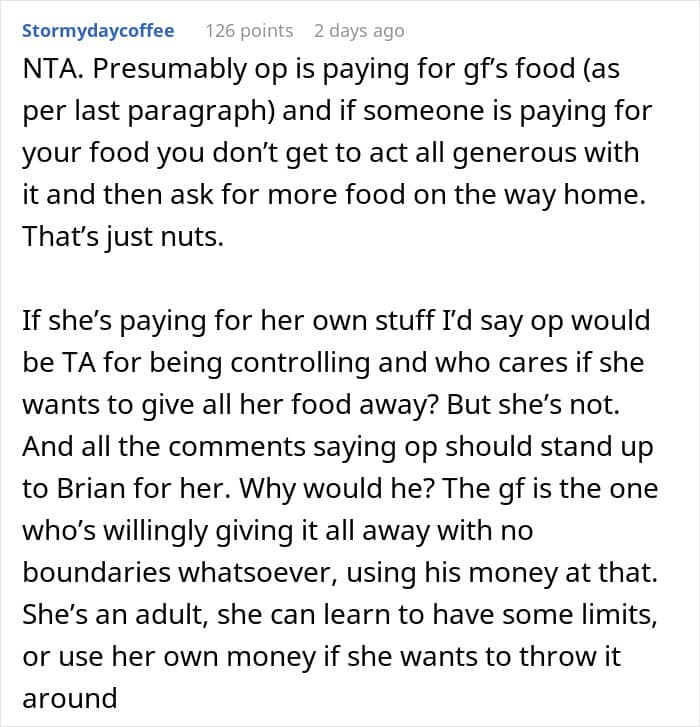
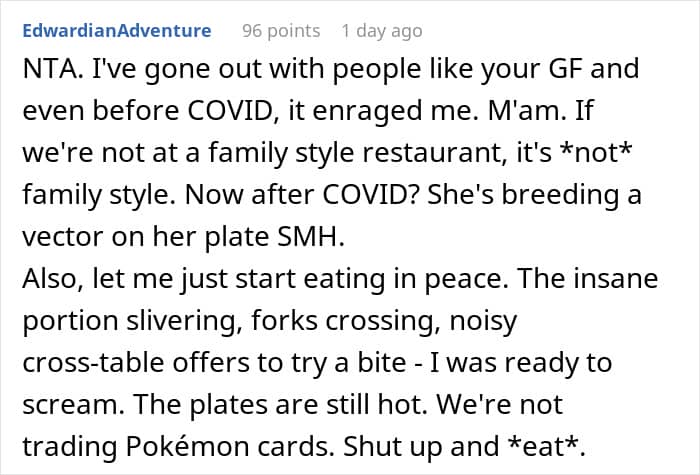
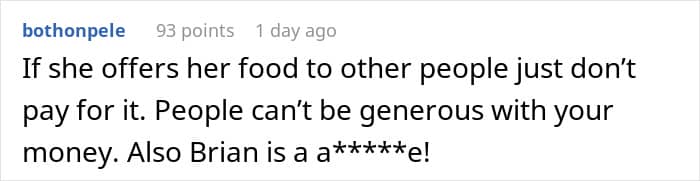
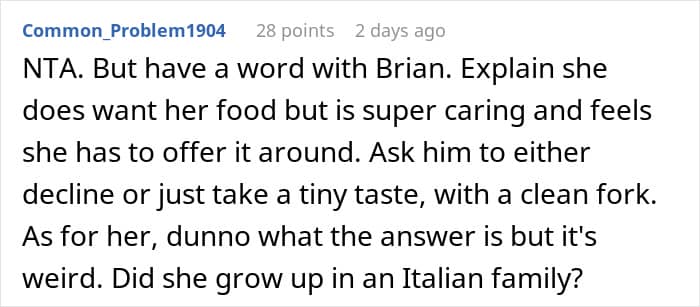
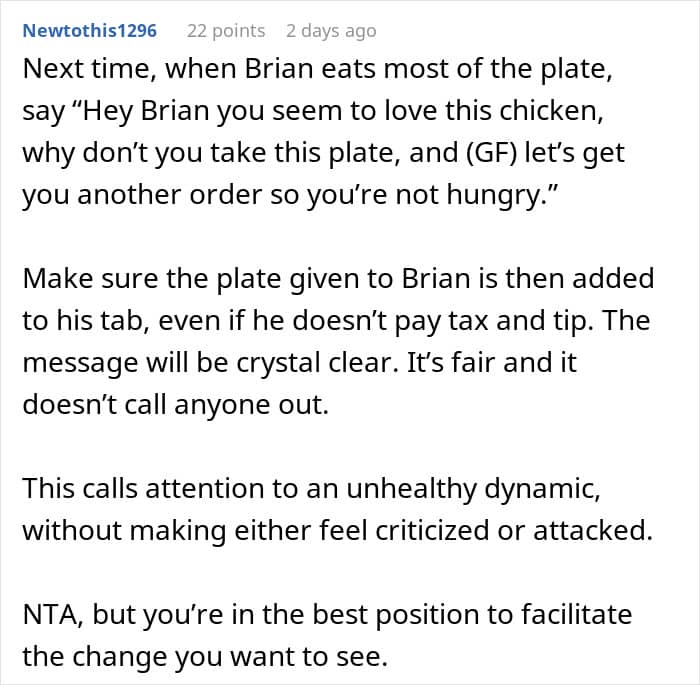
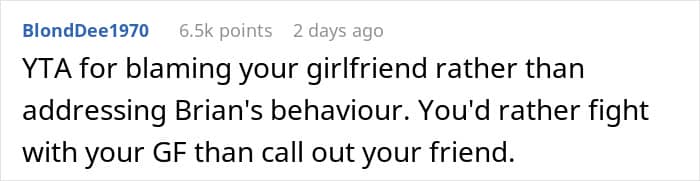
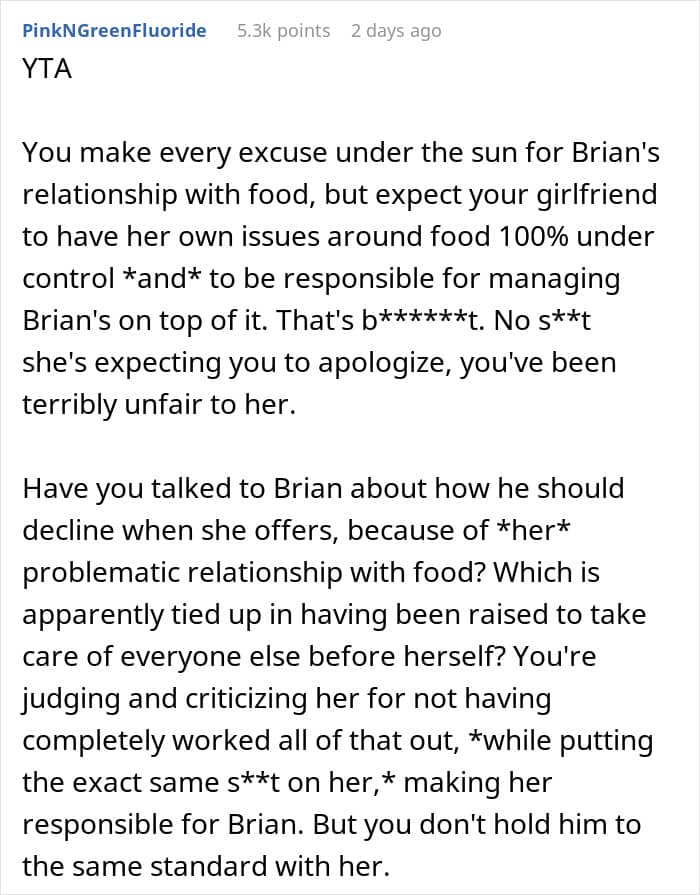
Quite a few people blamed him for confronting his partner instead of his friend

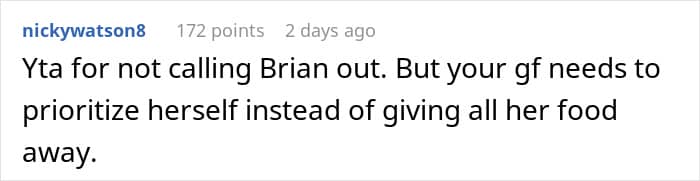

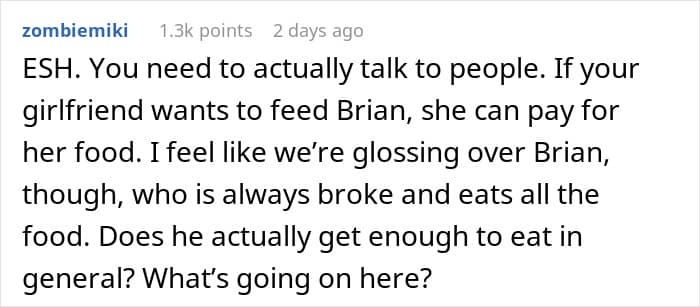
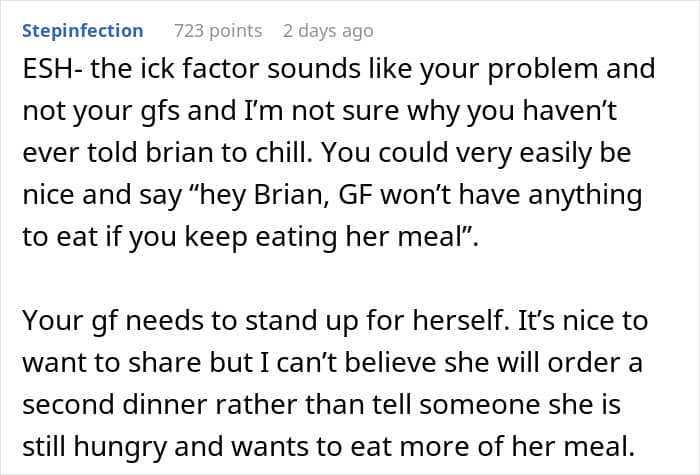
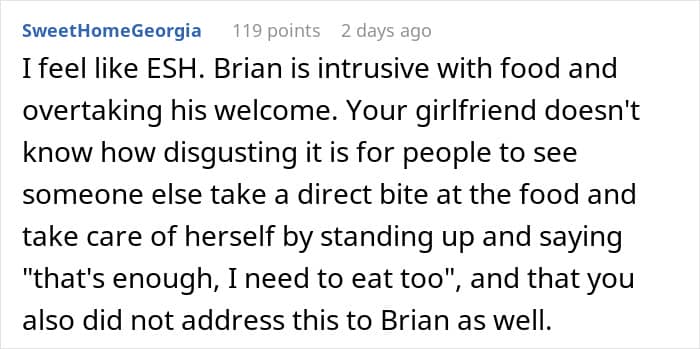
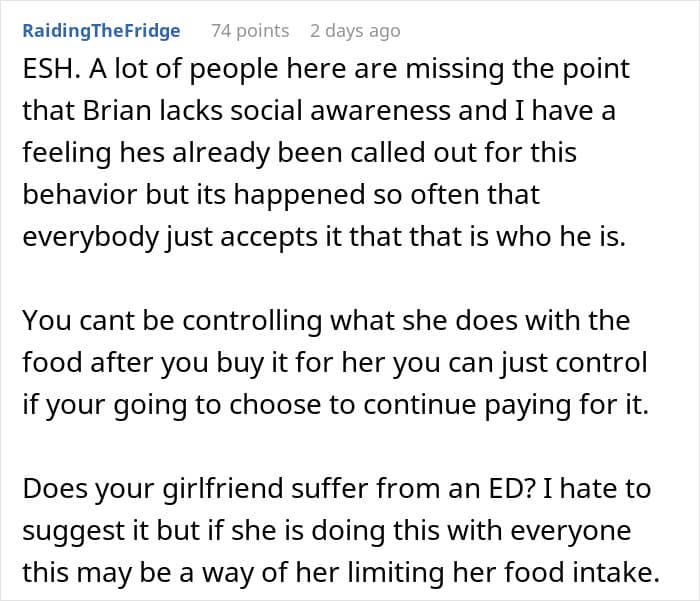
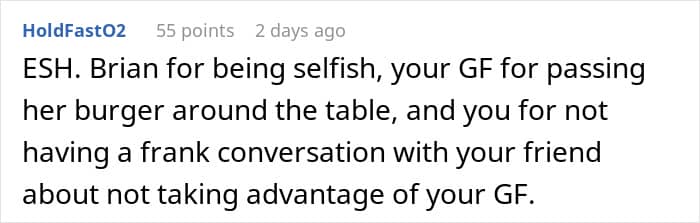

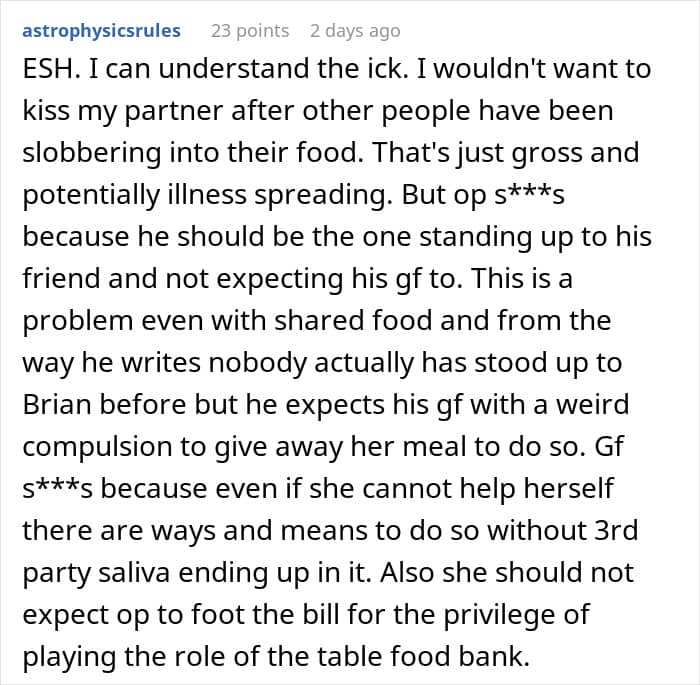
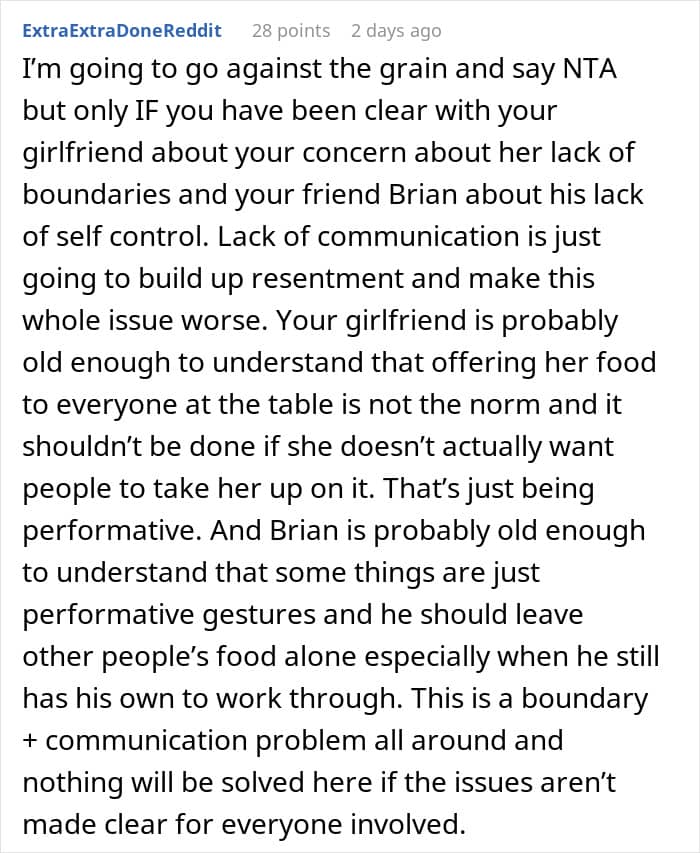
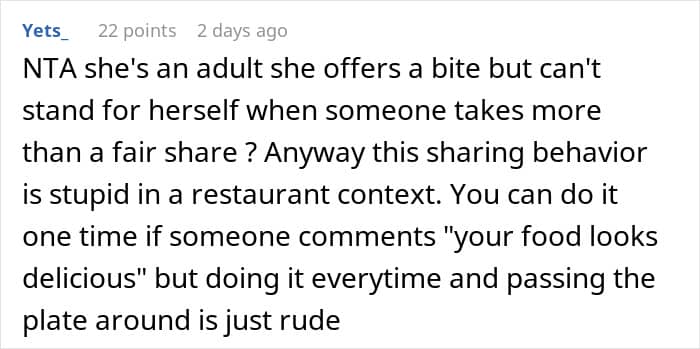
But some said his girlfriend needs to be more mindful of how much she shares